
Potala Palace history in brief
The history of Potala Palace has two layers. The official tourism office places its origin in the 7th century and the rebuilding and extension of the present complex in the 17th century. So the buildings you see today are not simply the first structure, and not everything visible dates from the earliest period. The palace stands on the Red Hill above Lhasa and served as the winter residence of the Dalai Lamas in the past.
This page keeps to dates and functions. It gives no year for the first construction and leaves out legends about the building.
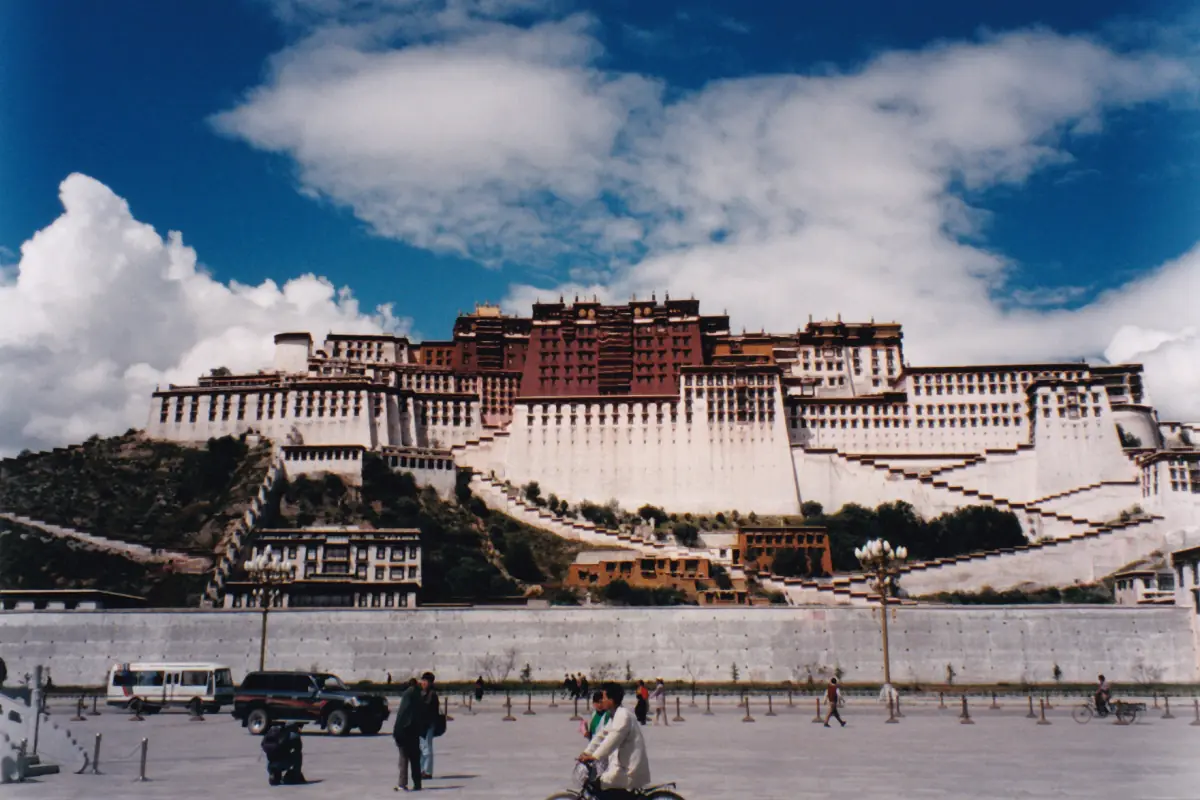
Origins in the 7th century
A first building on the Red Hill.
A December 2023 article by the state ethnic affairs authority links an earlier building on the Red Hill with Songtsen Gampo and with the move of the seat of government to Lhasa. It is an older text, so treat the details as the authority's account. What you can say safely is that the hill had a building before the present complex and that the site is much older than the 17th century structure that visitors climb today.
Rebuilding from 1645
The same article says that in 1645 the 5th Dalai Lama decided to rebuild. Rough construction, mainly of the White Palace, was largely finished about three years later, with the move-in following in 1653. This is why the 17th century is named as the time of the present complex.
Our pick: train tour into Tibet
This tour follows the rail route from Beijing and Xi'an to Lhasa, with the Tibet stage including Potala and Jokhang.
Hand-picked tours, booked through GetYourGuide. Prices are indicative starting prices in US dollars (as of October 2026). Tap a tour for live availability and the current price in your currency.
Tours that take in Potala, Jokhang and Barkhor
Rail journeys and guided tours that visit Potala Palace, the Jokhang Temple and the Barkhor, with live prices and availability.
Former winter residence of the Dalai Lamas
The two main parts of the palace had different tasks. The White Palace served administration and living. UNESCO describes a central ceremonial hall with a throne, and private rooms and audience rooms in the upper part. The Red Palace holds religious halls and gilded funeral stupas of earlier Dalai Lamas. The site was the winter residence of the Dalai Lamas, and the Norbulingka was their summer palace.
These descriptions explain the layout when you stand outside, because the white and red walls reflect the two functions. Photography is not allowed in the halls, as explained on inside Potala Palace.
UNESCO World Heritage
UNESCO inscribed the Potala Palace in 1994. The Jokhang Temple was added as an extension in 2000, and the Norbulingka followed in 2001. The three do not share a ticket, so each place has its own rules. For the temple, see the Jokhang Temple page, and for the visit planning go to Potala Palace tickets.
Potala Palace facts
Location, height and address at a glance.
Altitude
UNESCO gives 3,700 m as the elevation of the complex. This is the height above sea level, not the height of the building.
Height of the building
An older municipal source from 2016 names 117 m and 13 storeys. Treat these as an older measurement, not a current survey.
Address
Beijing Middle Road 35, Chengguan, Lhasa. Allow 2 to 3 hours for a visit, a planning figure from the tourism office. Because of the altitude, see Lhasa altitude sickness before you climb.
If you want to see the sights in person, a rail tour from Beijing through Xi'an to Tibet visits Potala, Jokhang and Barkhor in its Tibet leg.
Potala Palace history: frequently asked questions
When was Potala Palace built?
The tourism office dates its origin to the 7th century and the rebuilding and extension of the present complex to the 17th century. This page gives no year for the first construction.
Who ordered the rebuilding?
According to a December 2023 article, the 5th Dalai Lama decided in 1645 to rebuild. The move-in followed in 1653.
What were the White and Red Palaces used for?
The White Palace was used for administration and living. The Red Palace holds religious halls and gilded funeral stupas of earlier Dalai Lamas.
When did UNESCO list the palace?
In 1994. The Jokhang Temple was added in 2000 and the Norbulingka in 2001.
How high is Potala Palace?
UNESCO gives 3,700 m as the altitude of the complex. An older source from 2016 names 117 m and 13 storeys for the building itself.